Oct 6, 2026
AI & Automation

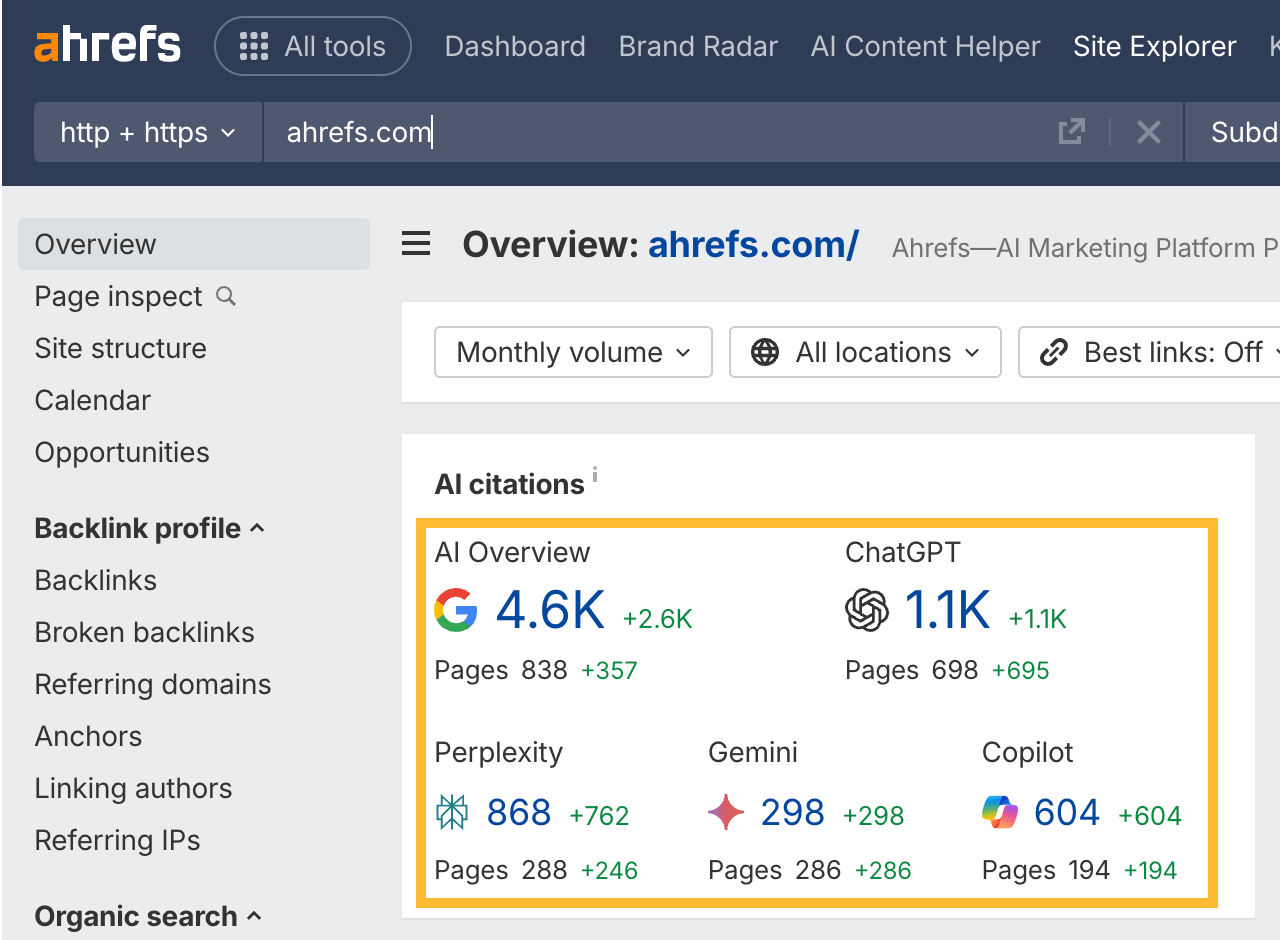
Clients now ask me whether their brand appears in ChatGPT. It is a fair question. The tricky part is that one neat percentage cannot explain every answer an AI system gives. I want to see the questions behind the number, the words in the answer and the pages it cites.
Here are four tools on my shortlist. I am comparing what their product documentation says they offer. I have not tested every paid plan side by side, and a review claiming perfect certainty in a market changing this quickly deserves a raised eyebrow.
First, what counts as AI visibility?
Imagine someone asks an AI assistant for an SEO consultant in Lisbon. If it names your business, that is a mention. If it links to your site, that is a citation. If the person visits and books a call, that is an outcome. I track all three separately. A mention is encouraging, but it does not pay an invoice.
I also keep the prompt, location, language and date with the result. Otherwise, it is too easy to celebrate an answer nobody in your market would ever ask for.
1. Ahrefs Brand Radar: finding the wider picture
Ahrefs Brand Radar lets you explore a large set of AI answers, brands and cited pages. It is my starting point for finding the competitors and publishers that keep appearing around a topic.
Its broad index is useful for discovery. I also add the exact questions my customers ask. A big dataset can miss a small, valuable niche, especially when the business is new.
2. Semrush AI Visibility Toolkit: tracking alongside SEO
Semrush AI Visibility Toolkit brings brand benchmarking and prompt tracking into a wider marketing platform. It may be the easiest starting point for a team already doing its SEO reporting there.
I check the prompt list before admiring the dashboard. If it tracks the wrong questions, the tidy charts simply make the wrong story look more convincing.
3. Profound: digging into prompts and citations
Profound focuses on prompts, answers and citation sources, with ways to look at topics, audiences and regions. It suits a larger team investigating why a competitor is cited and which page might close the gap.
That detail is valuable if someone has time to act on it. If nobody owns the follow-up work, the report becomes another monthly meeting with better graphics.
4. Peec AI: a focused view of mentions
Peec AI tracks brand mentions and citation sources in AI answers. It fits a team watching a defined set of buyer questions and turning missing mentions into content or outreach ideas.
Before choosing it, I check the AI platforms, countries and reporting options I need. A tool can be excellent and still be the wrong fit for one market.
My test for two finalists
I write down ten questions a buyer might really ask. Then I run the same set in two tools, save the answers and compare what they show. Can I see the original response? Can I find the cited URL? Can I tell whether a change is a pattern or one lucky answer?
For broad discovery, I start with Brand Radar. For a team already in Semrush, its toolkit is the obvious first check. For deeper investigation, I compare Profound and Peec AI against the team's reporting needs. Search Console and lead data stay in the picture, too. If you want help turning visibility findings into useful website changes, get in touch.
FAQ: AI visibility tools
What are AI visibility tools?
They check whether a brand appears in AI answers and, depending on the product, which pages are cited. Some start with a large index; others repeatedly test a chosen list of prompts. The right choice depends on the questions you need answered.
What is the best AI visibility tool?
It depends on the job. Ahrefs is a strong shortlist for broad discovery, Semrush for teams already using its platform, and Profound or Peec AI for closer prompt monitoring. Compare two using the same real buyer questions.
How do I track visibility in AI search?
Pick questions that match what customers ask, then record mentions, citations and the exact answer over time. Keep language and location consistent. I also check whether visits and enquiries change; a dashboard score alone is not a business result.
Is LLM visibility the same as SEO?
No. SEO covers how a site appears in search results. LLM visibility looks at whether AI-generated answers mention or cite the brand. The work overlaps: clear, useful pages still matter. I do not replace basic SEO work with a new acronym and a new invoice.
Do I need an answer engine optimisation tool?
Not always. Start by checking a few important questions and your existing search data. A paid tool becomes useful when you need repeatable monitoring across many prompts, competitors or markets, and someone can act on what it finds.
Can I track my brand in Google AI Overviews?
Several visibility tools monitor AI Overviews. Check what they count as a mention or citation and which countries they cover. I also use Search Console to understand how my own pages perform in Google's search experiences.
Can I track brand mentions in ChatGPT?
Yes, tools such as those in this article can sample ChatGPT answers for chosen prompts. Results can vary, so I repeat checks and look at the answer itself. One screenshot is a clue, not a trend.
What should AI brand monitoring measure?
At minimum: relevant prompts, brand mentions, cited pages, competitors and changes over time. For a business, I also want to know whether the findings lead to better pages, qualified visits or enquiries. That is how I decide if the subscription is earning its place.